
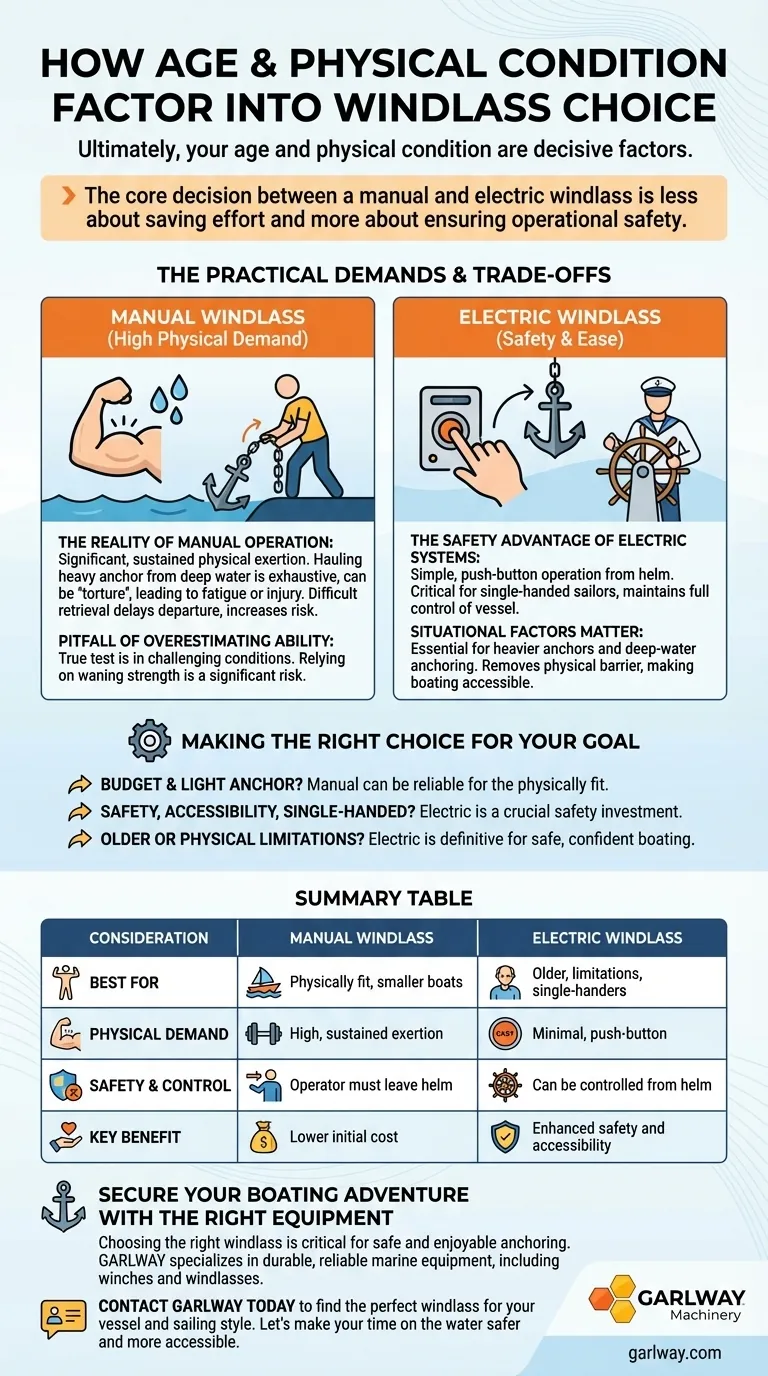
Ultimately, your age and physical condition are decisive factors in choosing a windlass. While younger or more athletic sailors may capably operate a manual windlass, older individuals or those with physical limitations will find an electric model is not a luxury, but a practical necessity for safe and enjoyable boating, especially when retrieving an anchor from deep water.
The core decision between a manual and electric windlass is less about saving effort and more about ensuring operational safety. An electric windlass removes a significant physical barrier, making boating more accessible and manageable, particularly in challenging conditions or when sailing alone.
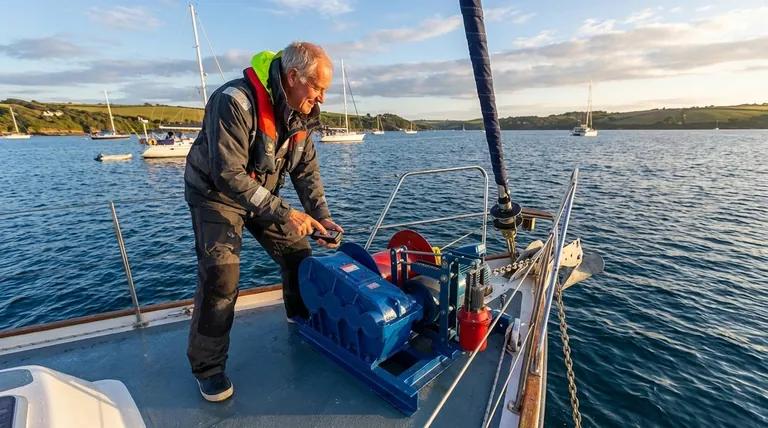
The Practical Demands of Anchor Retrieval
Choosing a windlass requires an honest assessment of physical capability against the real-world demands of weighing anchor.
The Reality of Manual Operation
A manual windlass requires significant and sustained physical exertion. Hauling a heavy anchor and chain from a depth of 50 feet or more is not a minor task.
For many, especially older sailors, this repetitive, heavy work can be exhausting and has been described as "torture." This physical strain can lead to fatigue, injury, or an inability to retrieve the anchor quickly in an emergency.
The Safety Advantage of Electric Systems
An electric windlass transforms anchor retrieval into a simple, push-button operation, often managed directly from the helm.
This is a critical advantage for single-handed sailors, who must manage the boat's position while also handling the anchor. It allows the operator to remain in full control of the vessel without leaving the cockpit.
Understanding the Trade-offs
Your choice should be based on a realistic assessment, not just on cost or perceived simplicity.
The Pitfall of Overestimating Ability
The true test of a windlass isn't on a calm, sunny day. It's when the wind is picking up and you need to leave an anchorage quickly and safely.
Relying on physical strength that may wane with age or fatigue is a significant risk. A difficult manual retrieval can delay departure, cause physical injury, or lead to poor decision-making under stress.
Situational Factors Matter
Beyond personal fitness, your choice must align with your vessel and sailing style. The size of your boat and the weight of your ground tackle are primary considerations.
Heavier anchors and deep-water anchoring inherently increase the physical load, making electric windlasses the more practical and often necessary choice, regardless of the operator's age.
Making the Right Choice for Your Goal
- If your primary focus is budget on a smaller boat with a light anchor: A manual windlass can be a perfectly reliable and cost-effective choice for a physically fit sailor.
- If your primary focus is safety, accessibility, or sailing single-handed: An electric windlass is a crucial investment that removes physical strain and improves operational control.
- If you are an older sailor or have any physical limitations: An electric windlass is the definitive choice to ensure you can continue boating safely and with confidence for years to come.
Ultimately, selecting the right windlass is about matching the equipment to your realistic capabilities and ensuring your time on the water is defined by enjoyment, not physical struggle.
Summary Table:
| Consideration | Manual Windlass | Electric Windlass |
|---|---|---|
| Best For | Physically fit sailors on smaller boats | Older sailors, those with limitations, single-handers |
| Physical Demand | High, sustained exertion | Minimal, push-button operation |
| Safety & Control | Operator must leave helm to operate | Can be controlled from the helm |
| Key Benefit | Lower initial cost | Enhanced safety and accessibility |
Secure Your Boating Adventure with the Right Equipment
Choosing the right windlass is critical for safe and enjoyable anchoring. At GARLWAY, we specialize in durable and reliable marine equipment, including winches and windlasses, designed to meet the demands of sailors and boaters worldwide.
Whether you're a solo sailor needing effortless control or looking for equipment that adapts to your physical needs, our solutions ensure you can focus on the journey, not the struggle.
Contact GARLWAY today to find the perfect windlass for your vessel and sailing style. Let's make your time on the water safer and more accessible.
Visual Guide
Related Products
- Electric Hoist Winch Boat Anchor Windlass for Marine Applications
- Heavy Duty Electric Boat Winch Windlass Anchor
- 12000 lb Electric Boat Trailer Winch with Windlass Anchor Warn
- Quick Windlass Portable Winch for Truck and Boat Best Boat Winch
- Warn Winch Windlass Boat Trailer Winch
People Also Ask
- How does an electric anchor winch work? Power, Safety, and Reliable Operation Explained
- What are the advantages of installing an electric anchor winch on a boat? Boost Safety & Ease for Boaters
- What are the operational differences between electric hoists and winches? A Guide to Safe Lifting vs. Pulling
- What are the main benefits of a boat anchor winch? Boost Safety & Efficiency for Your Vessel
- How does a boat anchor winch work? A Guide to Reliable Anchor Handling


