
At their core, rotary drum mixers are adapted for the food industry by adhering to strict hygienic design principles. This involves using food-grade materials like stainless steel, ensuring high-quality surface finishes and welds to prevent contamination, and incorporating specialized features for processes like coating, heating, and automated cleaning.
The transition from a standard industrial mixer to a food-grade rotary drum mixer is not just a material upgrade. It is a fundamental shift in design philosophy, prioritizing product purity, sanitation, and the gentle handling required to maintain the integrity of food ingredients.
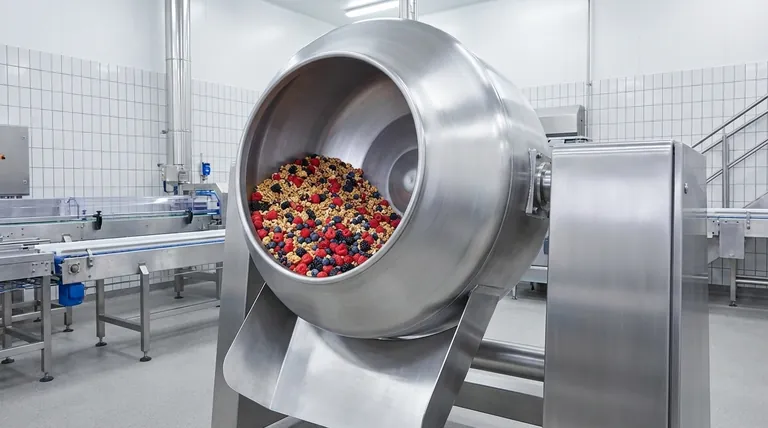
The Foundation: Hygienic Design Principles
The primary concern in any food application is preventing contamination and ensuring the product is safe for consumption. Hygienic design is the set of principles that addresses this challenge directly.
Prioritizing Stainless Steel Construction
All components that come into contact with the food product are constructed from stainless steel.
This material is chosen for its non-porous, corrosion-resistant, and non-reactive properties, ensuring it does not harbor bacteria or leach unwanted flavors or substances into the mix.
The Critical Role of Surface Finish and Welds
Special attention is given to achieving a smooth, polished surface finish on all contact parts.
Seamless welds and polished surfaces eliminate microscopic crevices. These areas are common breeding grounds for bacteria, and their removal is crucial for maintaining a sanitary environment and simplifying the cleaning process.
Ensuring All Materials are Food-Grade
Beyond the primary stainless steel drum, all other components that might have incidental contact with the product must be made from approved materials. This includes gaskets, seals, and lubricants.
Adapting the Mixing Process for Food
Food ingredients are often delicate, and the mixing process itself must be tailored to achieve specific outcomes like coating or temperature modification without damaging the product.
Gentle Blending for Product Integrity
Rotary drum mixers operate at slow rotational speeds, using internal flights or chutes to gently fold, cut, and turn the ingredients.
This gentle tumbling action is ideal for mixing fragile items like snack foods, cereals, or frozen vegetables without causing breakage or degradation.
Precise Liquid and Additive Injection
Many food applications require adding liquids. Mixers are often equipped with liquid injection systems, such as spray bars or nozzles.
This allows for the precise and even application of oils, flavorings, syrups, or binders, which is essential for processes like product coating, enrobing, or adding subtle flavors.
Advanced Temperature Control
Food processing often requires precise temperature management. Mixers can be fitted with heating or cooling jackets that circulate steam, water, or oil around the drum.
For rapid chilling or freezing, systems can be adapted for cryogenic mixing using liquid nitrogen, which helps lock in freshness and texture in sensitive products.
Addressing the Demands of Food Safety and Operations
Adapting a mixer for the food industry also means optimizing it for the operational realities of a food production facility, where cleanability and safety are paramount.
The Necessity of Clean-in-Place (CIP) Systems
To ensure rapid and verifiable sanitation, many food-grade mixers incorporate Clean-in-Place (CIP) or Wash-in-Place (WIP) systems.
These automated systems use high-pressure spray nozzles to clean and sanitize the mixer's interior without requiring disassembly, drastically reducing downtime between batches and minimizing human error.
Designing for Easy Inspection and Access
For manual cleaning and quality control checks, mixers are often designed with extra-large, easy-opening doors. This provides maintenance and sanitation crews with complete access to the drum's interior.
Handling Combustible Ingredients
When working with fine powders like flour, sugar, or spices, there is a risk of combustible dust explosions. Mixers can be built to ATEX-compliant standards for safe operation in these potentially hazardous environments.
Making the Right Choice for Your Application
The specific adaptations you require will depend entirely on your product and process goals.
- If your primary focus is coating and flavoring: Prioritize a mixer with a high-precision liquid injection system and a design that ensures gentle tumbling.
- If your primary focus is safety and sanitation: A design with CIP/WIP capabilities, polished stainless steel surfaces, and easy-access doors is non-negotiable.
- If your primary focus is temperature-sensitive products: Look for mixers equipped with heating/cooling jackets or cryogenic injection capabilities to maintain product integrity.
Ultimately, selecting a rotary drum mixer with the correct food-grade adaptations is a critical step in guaranteeing product quality, operational efficiency, and consumer safety.
Summary Table:
| Adaptation Feature | Key Benefit for Food Industry |
|---|---|
| Stainless Steel Construction | Prevents contamination, is corrosion-resistant, and easy to clean. |
| High-Quality Surface Finishes | Eliminates bacteria-harboring crevices for superior sanitation. |
| Gentle Tumbling Action | Mixes fragile ingredients like snacks and cereals without breakage. |
| Liquid Injection Systems | Enables precise, even coating with oils, flavors, or syrups. |
| Temperature Control Jackets | Manages heating or cooling for sensitive product integrity. |
| Clean-in-Place (CIP) Systems | Automates sanitation to reduce downtime and ensure safety. |
Need a reliable mixing solution for your food production line?
GARLWAY specializes in robust construction machinery and can connect you with the right partners for food-grade equipment. Our expertise in durable winches, concrete mixers, and batching plants for global contractors translates to an understanding of reliability and efficiency that is critical in food processing.
Contact GARLWAY today to discuss how we can support your project's success and ensure your operations run smoothly and safely.
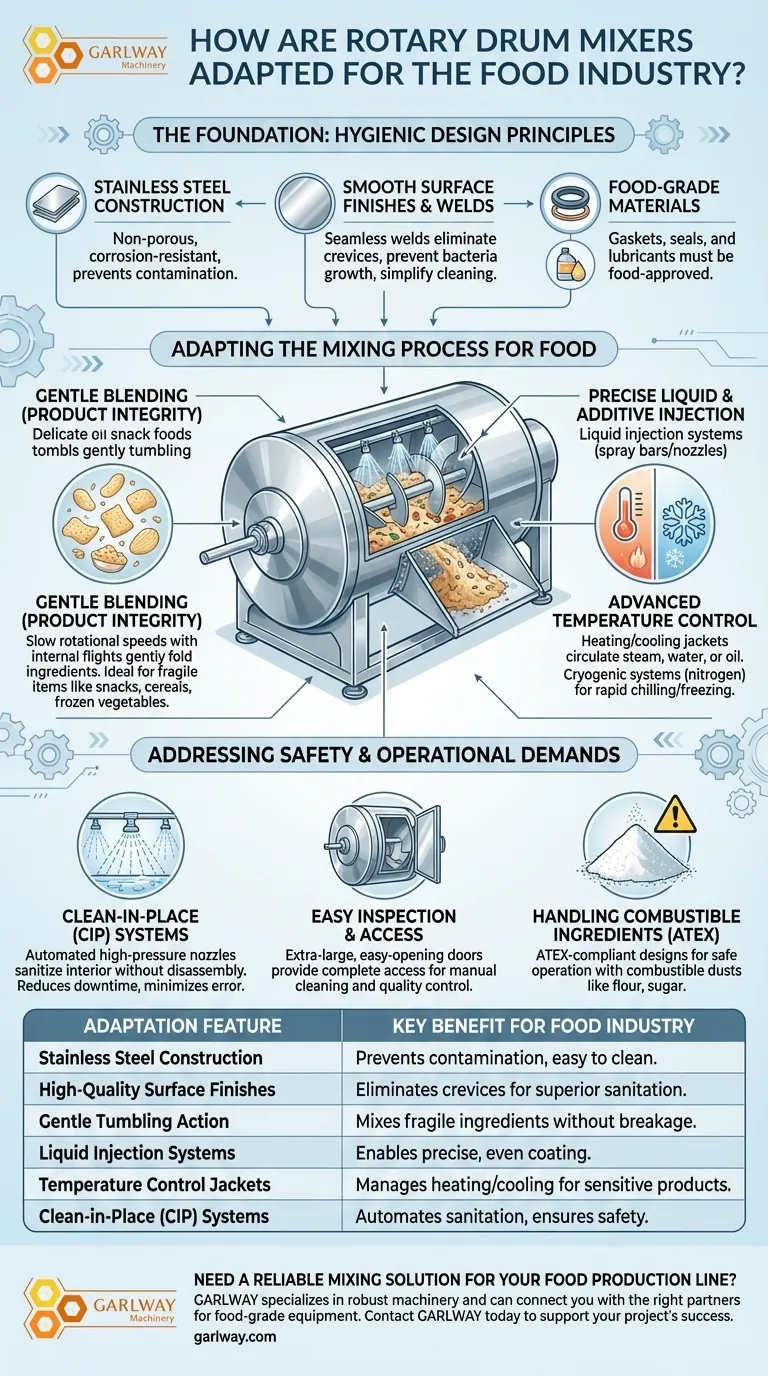
Visual Guide
Related Products
- Belle Mixer Drum Self Loading Mortar Mixers JS3000
- Concrete Cement Mixer Machine Drum Mixer for Construction
- Harbor Freight JS1500 On Site Concrete Mixing Volumetric Cement Mixer
- JS1000 Volumetric Concrete Mortar Mixer for Sale Skid Steer Cement Mixer
- Shaft Mixer Machine for Cement and Regular Concrete Mixing
People Also Ask
- What are the features of mobile transporting in a self loading mixer? Boost On-Site Efficiency
- Why is timely cleaning important for a self loading mixer? Prevent Costly Downtime and Mix Failure
- How is discharging accomplished in a self loading mixer? Master Precise Concrete Placement
- What is the purpose of keeping the drum rotating during transportation in a self loading concrete mixer? Ensure Quality & Consistency
- What components are involved in the loading process of a self loading concrete mixer? A Guide to the Key Systems


