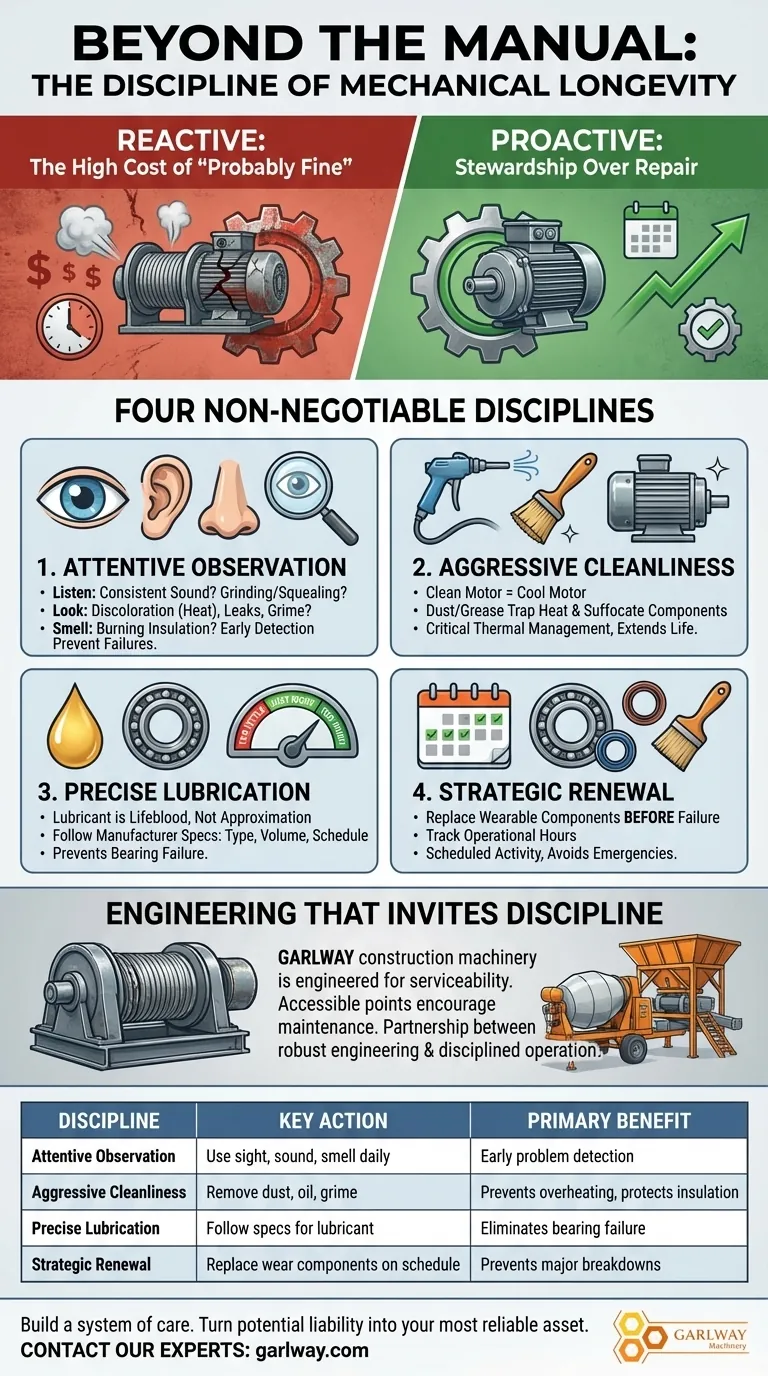
The High Cost of "Probably Fine"
On a busy construction site, a winch motor doesn't just die. It whispers first.
An experienced operator notices the change—a slightly higher-pitched hum under load, a faint smell of hot metal that wasn't there yesterday. The temptation is immense to ignore it. The schedule is tight. The load is moving. It's "probably fine."
This is the most dangerous assumption in any operation. The belief that a machine will simply run until it stops is a cognitive shortcut, a way of prioritizing the urgent task over the important one. But it mistakes silence for health.
In reality, catastrophic failure is almost never a single event. It is the final, loudest stage of a long, quiet process of neglect. Shifting from a reactive "run-to-failure" mindset to a proactive discipline of prevention is not just a maintenance strategy; it's a fundamental change in operational psychology.
Stewardship Over Repair
Effective maintenance isn't about being good with a wrench. It's about creating a system that makes heroic, last-minute repairs unnecessary. This system is built on four simple, but non-negotiable, disciplines.
Discipline 1: Attentive Observation
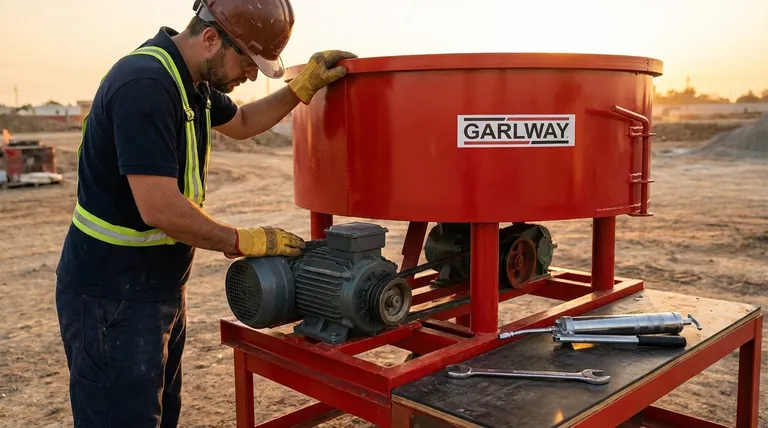
Your senses are the most advanced diagnostic tools you own. A routine, deliberate walk-around is not a break from work; it is the work.
- Listen: Is the motor's sound consistent? Grinding, squealing, or excessive vibration are pleas for help.
- Look: A motor communicates distress with heat. Discoloration on the housing is a clear sign of overheating. Check for leaking fluids or accumulating grime.
- Smell: The sharp, acrid smell of burning electrical insulation is an unmistakable alarm bell.
This is your first line of defense. It costs nothing but a few minutes of focused attention and can prevent a failure days or weeks before it happens.
Discipline 2: Aggressive Cleanliness
A clean motor is a cool motor. Dust, cement powder, and grease form an insulating blanket, trapping heat and suffocating the very components designed to dissipate it.
Heat is the primary enemy of a motor's winding insulation. As the insulation breaks down, the motor's life expectancy plummets. Regular cleaning with compressed air or a soft brush is not about aesthetics; it is a critical act of thermal management that directly extends the machine's operational life.
Discipline 3: Precise Lubrication
Bearings are the heart of a motor's mechanical function, and lubricant is their lifeblood. But lubrication is a science of precision, not approximation.
- Too little lubricant causes friction, heat, and rapid wear.
- Too much lubricant can blow out seals, contaminate windings, and cause its own form of overheating.
Adhering strictly to the manufacturer's recommended lubricant type, volume, and schedule is non-negotiable. It's the difference between a bearing that lasts for years and one that fails in months.
Discipline 4: Strategic Renewal
Wearable components like bearings, brushes, and seals have a finite lifespan. You can either decide when to replace them, or they will decide for you—usually at the most inconvenient time possible.
Proactive maintenance involves tracking operational hours and replacing these parts before they fail. This transforms maintenance from an unpredictable emergency into a scheduled, controlled activity. A ten-dollar bearing replaced on your schedule prevents a ten-thousand-dollar motor failure and a week of downtime on someone else's.
Engineering That Invites Discipline
This system of stewardship is far easier to implement when the machinery is designed to encourage it. The best equipment is built not just for performance, but for longevity and serviceability.
This is the philosophy behind GARLWAY's construction machinery. Our winches, concrete mixers, and batching plants are engineered for the harsh realities of the job site. We use robust components and prioritize designs with accessible service points because we know that a machine that is easy to maintain is a machine that gets maintained. It’s a partnership between robust engineering and disciplined operation.
The table below summarizes the shift from a reactive to a proactive mindset.
| Discipline | Key Action | Primary Benefit |
|---|---|---|
| Attentive Observation | Use sight, sound, and smell to check for issues daily. | Early detection of problems before they escalate. |
| Aggressive Cleanliness | Routinely remove dust, oil, and grime. | Prevents overheating and protects insulation. |
| Precise Lubrication | Follow manufacturer specs for lubricant type and interval. | Eliminates the primary cause of bearing failure. |
| Strategic Renewal | Replace wear components on a planned schedule. | Prevents minor part failures from causing major breakdowns. |
Ultimately, the longevity of your equipment is a direct reflection of the discipline you apply. By building a system of care, you turn a potential liability into your most reliable asset. To equip your team with machinery built for this philosophy of durability, Contact Our Experts.
Visual Guide