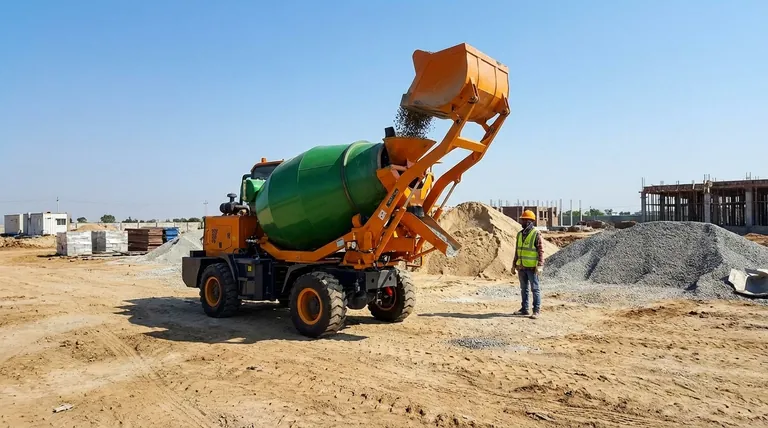
The Hidden Tax of Disjointed Work
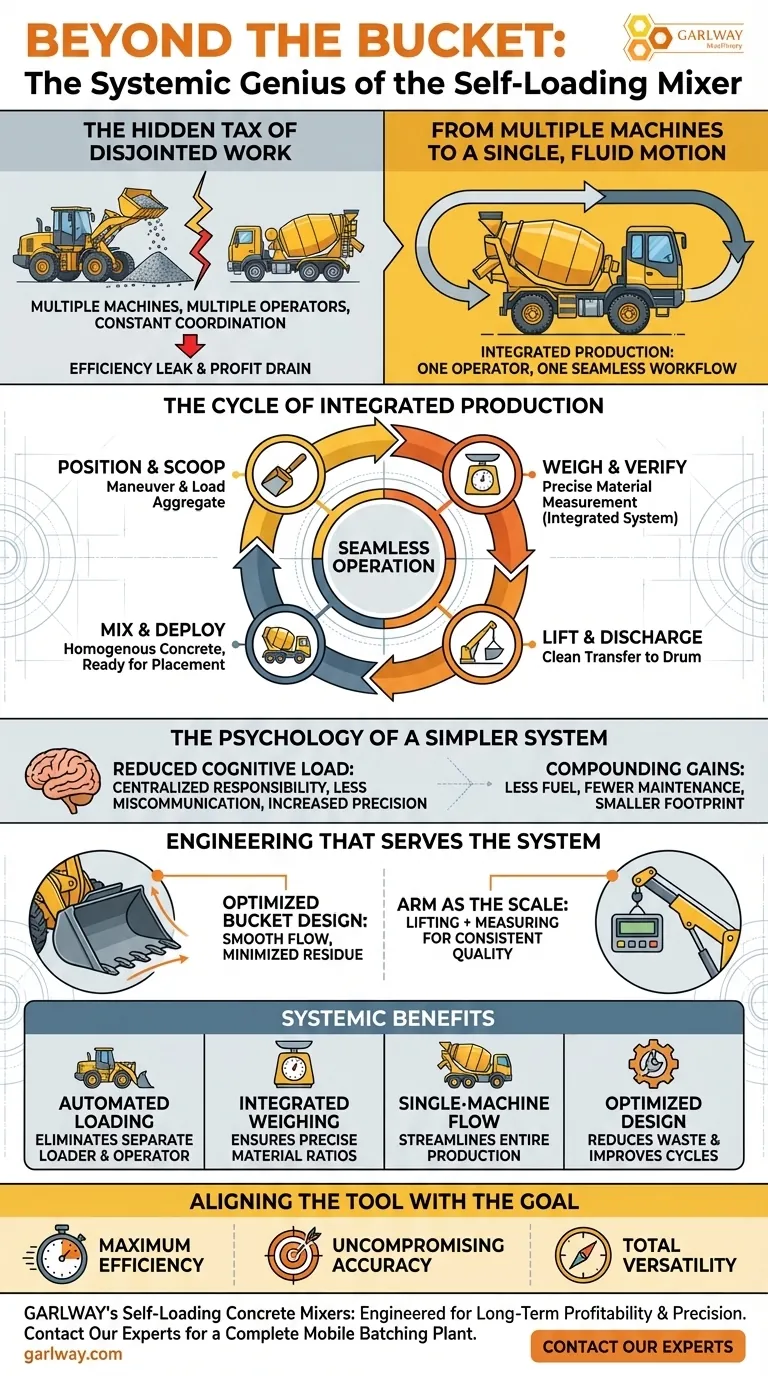
Picture a typical construction site preparing concrete. You see a wheel loader scooping aggregate. You hear its engine roar as it travels to a separate concrete mixer. An operator for the loader, another for the mixer. Two machines burning fuel. Two salaries. A constant, low-level dance of coordination where a single miscommunication can compromise a batch or delay the schedule.
This isn't just work; it's a system with a hidden tax. Every extra machine, every additional operator, every moment spent coordinating is a small efficiency leak. Individually, they seem minor. Cumulatively, they drain profitability.
This is a problem not of effort, but of design. The workflow is fragmented.
From Multiple Machines to a Single, Fluid Motion
The self-loading concrete mixer introduces a radical re-imagining of this process. Its defining feature—the articulated loading arm and bucket—isn't just a component. It is the integrator. It collapses a multi-machine, multi-person job into a single, elegant workflow controlled by one operator.
This system turns a complex sequence into a simple, repeatable cycle.
The Cycle of Integrated Production
The machine's genius lies in how it fuses distinct actions into one seamless operation:
- Position & Scoop: The operator maneuvers the arm to the material pile and scoops a load, just as a wheel loader would.
- Weigh & Verify: As the arm lifts, an integrated electronic weighing system measures the material in the bucket. This is the crucial quality control checkpoint, transforming the arm from a simple lever into a precision instrument.
- Lift & Discharge: With the correct weight confirmed, the arm pivots and empties the aggregate cleanly into the mixing drum.
- Mix & Deploy: Once all ingredients are added, the machine becomes a high-performance mixer, producing a homogenous concrete mix ready for placement.
The Psychology of a Simpler System
Reducing the number of machines on-site does more than cut capital costs; it fundamentally reduces cognitive load.
When one operator is responsible for the entire process from raw material to final mix, the channels for miscommunication disappear. Responsibility is centralized. The operator isn't just driving a machine; they are overseeing a complete production cycle. This ownership fosters precision and care.
The gains are not linear; they are compounding. Less fuel consumed per cubic meter of concrete. Fewer maintenance schedules to manage. A smaller operational footprint on a crowded job site. These efficiencies ripple outward, impacting everything from project timelines to profit margins.
Engineering That Serves the System
This level of efficiency is not an accident. It is the result of deliberate engineering choices that prioritize the integrity of the entire system.
More Than Just a Shovel
Look closely at the bucket. On many advanced models, it isn't a simple box. It's a rounded vessel with smooth arc transitions. This subtle design choice isn't aesthetic; it's physics. It improves how material flows both in and out, minimizing residue and speeding up cycle times. A small detail that pays dividends with every single load.
The Arm as the Scale
The most critical integration is the fusion of the hydraulic lifting system with the electronic weighing system. The arm doesn't just lift; it measures as it lifts. This eliminates the guesswork that can plague manual loading operations. It ensures that the first batch of concrete has the same precise ratios as the last, delivering the consistency that modern construction standards demand.
| Function | Key Systemic Benefit |
|---|---|
| Automated Loading | Eliminates need for a separate wheel loader and operator. |
| Integrated Weighing | Ensures precise material ratios for consistent quality. |
| Single-Machine Flow | Streamlines the entire production process. |
| Optimized Design | Reduces waste and improves cycle efficiency. |
Aligning the Tool with the Goal
The beauty of such an integrated system is that it offers multiple points of leverage, depending on your primary objective.
- For Maximum Efficiency: The automated loading arm is the core value. It is the feature that cuts your on-site machinery and labor costs in half.
- For Uncompromising Accuracy: Focus on the precision and responsiveness of the integrated weighing system. This is what guarantees the quality of your end product.
- For Total Versatility: The maneuverability of the arm and the sophistication of the controls determine the machine's effectiveness in tight or complex job sites.
GARLWAY's self-loading concrete mixers are engineered around this philosophy of systemic integration. We build machines for contractors who understand that true long-term profitability comes from optimizing the entire workflow, not just one part of it. Our mixers combine a powerful, precise loading arm with a robust mixing drum to create a complete, mobile batching plant designed for the realities of the modern job site.
For teams ready to eliminate hidden inefficiencies and embrace a system designed for profitability and precision, the next step is finding the right equipment. Contact Our Experts
Visual Guide
Related Products
- Skid Steer Self Loading Concrete Mixers for Construction
- Belle Mixer Drum Self Loading Mortar Mixers JS3000
- Portable Cement Mixer with Lift Concrete Machine
- Portable Ready Mix Concrete Mixer Equipment
- Portable Concrete Mixer Machine Equipment for Mixing Concrete
Related Articles
- The Physics of a Faster Pour: Why Bucket Shape Defines Concrete Mixer Productivity
- Beyond Gravity: The Engineering of a Perfect Concrete Pour
- Beyond the Barrel: The Physics and Psychology of a Perfect Concrete Mix
- The Unseen Engine: How Integrated Mobility Solves Construction's Cognitive Load Problem
- The One-Machine Revolution: Deconstructing the Physics and Psychology of On-Site Concrete Production





