Proper cement mixer maintenance is a non-negotiable routine of daily cleaning, fluid checks, and mechanical inspections. The core tasks involve thoroughly cleaning the drum after each use, checking oil levels and filters, ensuring V-belts are tight, and lubricating specific moving parts while keeping gears free of grease.
The goal of cement mixer maintenance is not just to fix problems as they arise, but to establish a consistent, preventative routine. This discipline is what separates a reliable, long-lasting machine from one that causes costly downtime.
The Daily Maintenance Routine
A few minutes of inspection and cleaning at the end of each day is the single most effective way to prevent long-term damage and ensure your mixer is ready for the next job.
Immediate Cleaning After Use
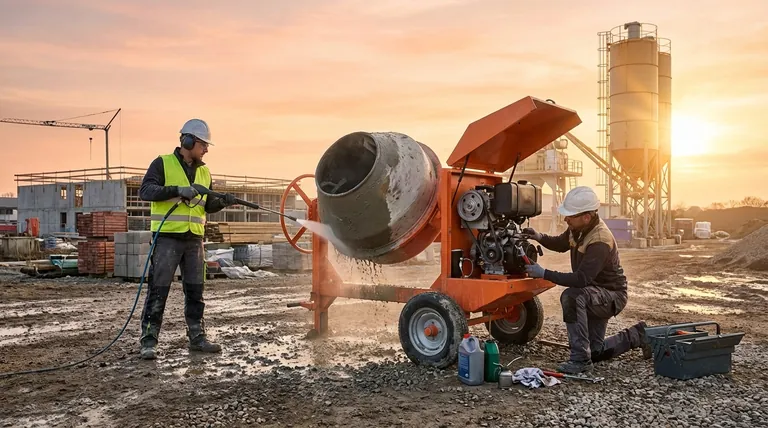
The most critical maintenance task is cleaning the drum immediately after you finish mixing. Concrete begins to cure quickly, and hardened residue is difficult and damaging to remove.
A pressure washer is highly effective for this task, ensuring all cement, sand, and aggregate are washed away. This prevents buildup that can throw the drum off balance and reduce mixing efficiency.
Inspecting Fluid Levels and Filters
For engine-powered mixers, a daily check of the oil level is essential for engine health. This is a simple but vital step.
You should also have a schedule for inspecting and cleaning or replacing filters. Clogged filters can starve the engine of clean air or fuel, leading to poor performance and potential damage.
Checking Mechanical Components
Visually inspect the mixer's frame and welds for any signs of stress or cracks.
Pay close attention to V-belts and pulleys. They should be kept tight to ensure efficient power transfer from the motor to the drum. A loose belt can slip, reducing turning power and causing premature wear.
Scheduled and Preventative Care
Beyond daily checks, a proactive maintenance schedule ensures the longevity and reliability of your equipment.
The Importance of Lubrication
Many moving parts on a cement mixer require regular greasing to reduce friction and prevent wear. Follow the manufacturer's guidelines for lubrication points and frequency.
Proper lubrication ensures smooth operation and protects critical components from seizing up under heavy loads.
A Critical Exception: The Gears
Never grease the main gears that turn the drum. While it may seem counterintuitive, grease on these gears will attract and trap sand, grit, and other debris.
This abrasive mixture acts like sandpaper, rapidly wearing down the gear teeth and leading to costly damage. The gears are designed to operate dry.
Monitoring for Irregularities
Always be attentive to the machine's operation. Listen for any abnormal sounds, such as grinding or squealing, and watch for unusual vibrations or movements.
These are often the first indicators of a developing problem, such as a failing bearing or a loose component. Addressing them early can prevent a major breakdown.
Common Pitfalls and Best Practices
Avoiding common mistakes is as important as performing the right tasks. Your operational choices directly impact the mixer's lifespan.
The True Cost of Neglecting Cleaning
Failing to clean the drum properly is the most common and costly mistake. Hardened concrete not only reduces the mixer's capacity but also creates an imbalance that puts immense strain on the motor, bearings, and frame.
Operator Skill and Quality Parts
A skilled operator who understands the machine's limits will cause less wear and tear. Pushing the mixer beyond its rated capacity will accelerate component failure.
When parts do need replacing, always use high-quality, original spare parts. Cheaper, non-standard parts may fit, but they often fail sooner and can cause collateral damage to other components.
Planning for the Inevitable
Even with perfect maintenance, parts will eventually wear out. Keeping a small stock of common spare parts, like belts and filters, can turn a day of downtime into a quick fix.
Building Your Maintenance Strategy
Your approach should be tailored to your primary operational goal.
- If your primary focus is maximum lifespan: Make meticulous, post-use cleaning your top priority and always use original manufacturer parts for repairs.
- If your primary focus is daily reliability and safety: Emphasize daily inspections of belts, fluids, and the machine's frame, addressing any unusual noises immediately.
- If your primary focus is minimizing project downtime: Develop a scheduled maintenance plan and keep a stock of essential spare parts on hand.
A disciplined maintenance culture is the foundation of a productive and profitable operation.
Summary Table:
| Maintenance Task | Frequency | Key Purpose |
|---|---|---|
| Clean Drum | After each use | Prevent concrete buildup and imbalance |
| Check Oil & Filters | Daily (engine-powered) | Ensure engine health and performance |
| Inspect V-Belts & Pulleys | Daily | Maintain efficient power transfer |
| Lubricate Moving Parts | As per manufacturer schedule | Reduce friction and prevent wear |
| Keep Main Gears Dry | Always | Avoid attracting abrasive debris |
Maximize the lifespan and reliability of your construction equipment. GARLWAY specializes in durable construction machinery, including robust concrete mixers and batching plants designed for demanding job sites. Our experts can help you establish a preventative maintenance routine to minimize costly downtime. Contact GARLWAY today to discuss your equipment needs and keep your projects on schedule.
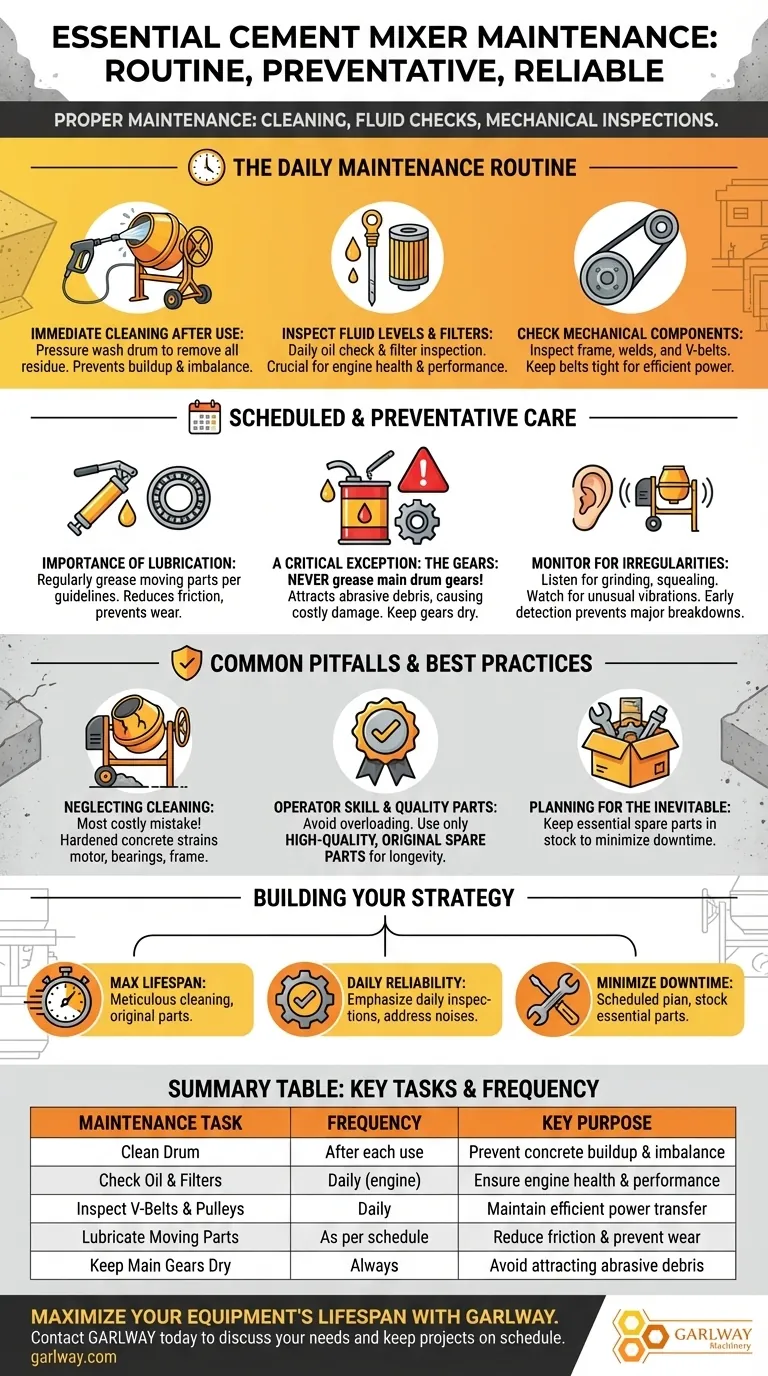
Visual Guide
Related Products
- HZS25 Best Cement Mixer for Quick Mix Concrete at Bunnings
- JDC350 Small Cement Concrete Mortar Mixer
- Concrete Cement Mixer Machine Drum Mixer for Construction
- JW1000 Mobile Cement Mixer Concrete Mixer Truck and Batching Plant
- JZC500 Large Cement Mixer Machine Price for Concrete Mix
People Also Ask
- How do cement mixers enhance safety on construction sites? Reduce Strain, Hazards, and Accidents
- What are the main components of a cement mixer? A Guide to Core Parts & Functions
- What are some tips for using a cement mixer effectively? Maximize Your Mixer's Performance & Concrete Quality
- How does cleaning a cement mixer after use benefit its performance? Maximize Lifespan and Mix Quality
- Why is it important to clean the cement mixer after use? Prevent Costly Damage and Ensure Quality Concrete