
At its core, the function of a material weighing system in a concrete batching plant is to precisely measure the exact quantities of aggregates, powders, and liquids required for a specific concrete mix design. This system is the critical control point that directly determines the final quality of the concrete and manages the overall cost of production.
The weighing system is more than just a set of scales; it is the heart of the plant's quality control mechanism. Its primary function is to enforce the engineering recipe, ensuring that every single batch of concrete has the correct proportions for consistent strength, durability, and performance.
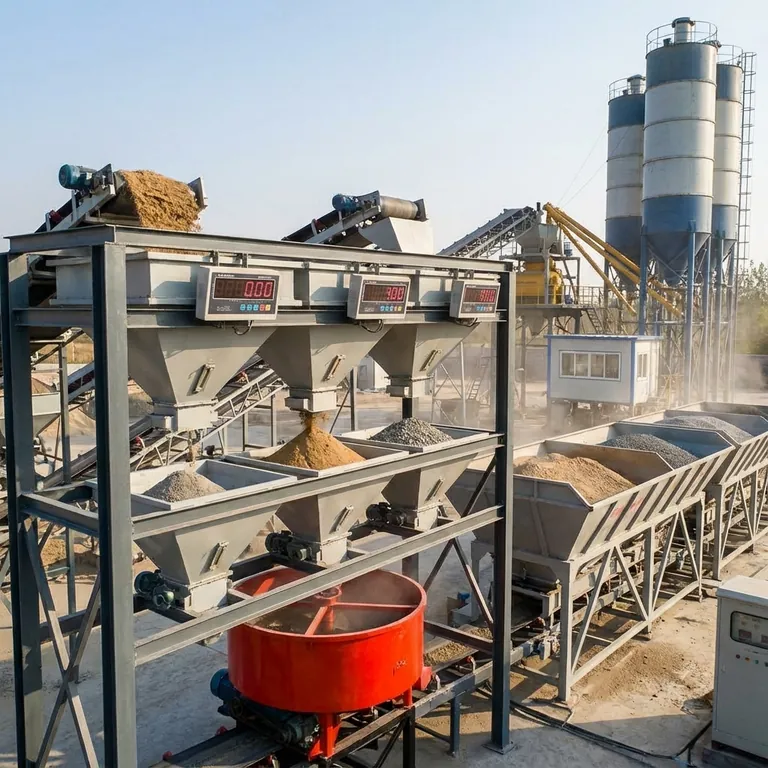
The Foundation of Concrete Quality and Cost Control
A concrete batching plant combines several raw materials, and the final product's characteristics are highly sensitive to the proportions used. The weighing system's function is to eliminate guesswork and human error from this critical process.
Guaranteeing Formula Accuracy
Concrete is the result of a precise chemical reaction. The weighing system meticulously measures each component—sand, gravel, cement, water, and additives—to guarantee the formulation is exact.
This precision ensures that the resulting concrete meets its specified strength and durability requirements, batch after batch.
Managing Production Costs
The most expensive ingredient in concrete is typically cement. The weighing system prevents costly waste by ensuring no more cement is used than is necessary for the design mix.
Accurate weighing also prevents under-dosing, which would compromise the quality of the concrete and lead to potential structural failures and reputational damage.
Enabling Automation and Consistency
Modern weighing systems are integrated with a central control system or computer. The operator inputs the desired mix recipe, and the system automates the weighing and batching process.
This removes the potential for manual error, increases production speed, and ensures every batch produced is identical to the last.
Two Core Weighing Methodologies
The specific design of a weighing system often depends on the plant's production capacity. The function remains the same—accurate measurement—but the method changes.
Independent Weighing for High Precision
In larger plants (typically over 50 cubic meters per hour), independent weighing is the standard. Each material—each aggregate, powder, and liquid—is weighed in its own separate hopper with its own dedicated scale.
This method offers the highest level of precision, as there is no potential for residual material to affect the measurement of the next ingredient. It is essential for high-specification projects.
Cumulative Weighing for Efficiency
For smaller plants (often under 20 cubic meters per hour), cumulative weighing (also called superimposed weighing) is common. In this setup, multiple materials are weighed sequentially in the same hopper.
For example, sand might be weighed first, followed by gravel added on top of it in the same weighing bin. This requires less equipment and can be more space-efficient, but it sacrifices a degree of precision compared to the independent method.
Understanding the Trade-offs
Choosing a weighing methodology involves balancing precision, speed, and cost. Neither system is universally superior; their function is optimized for different operational scales.
Precision vs. Investment
The primary trade-off is between accuracy and cost. An independent weighing system requires more scales, hoppers, and a more complex control interface, making the initial investment higher.
A cumulative weighing system is simpler and less expensive to install but may not meet the stringent accuracy demands of certain high-performance concrete specifications.
The Critical Role of Calibration
Regardless of the method used, the system's function is entirely dependent on proper calibration. An uncalibrated scale, whether independent or cumulative, will produce poor-quality concrete and lead to financial losses.
Regular maintenance and calibration by qualified technicians are non-negotiable for ensuring the weighing system performs its function correctly.
Making the Right Choice for Your Goal
The weighing system must be matched to the operational demands of the plant to function effectively.
- If your primary focus is high-volume output and meeting strict engineering specifications: Independent weighing is the necessary choice for its unparalleled precision and control.
- If your primary focus is cost-effective production for smaller-scale or general-purpose projects: Cumulative weighing offers a reliable and efficient balance of performance and initial investment.
Ultimately, the material weighing system translates a theoretical mix design into a consistent and reliable real-world construction material.
Summary Table:
| Aspect | Independent Weighing | Cumulative Weighing |
|---|---|---|
| Best For | Large plants (>50 m³/h), high-spec projects | Smaller plants (<20 m³/h), general-purpose projects |
| Precision | Highest (each material has a dedicated scale) | Good, but lower than independent |
| Cost & Complexity | Higher initial investment | More cost-effective and simpler |
| Key Function | Ultimate accuracy, zero cross-contamination | Efficient use of space and equipment |
Ready to achieve precise batching and consistent concrete quality?
At GARLWAY, we specialize in designing and supplying high-performance material weighing systems for concrete batching plants. Whether your project demands the ultimate precision of independent weighing or the cost-effective efficiency of cumulative weighing, our solutions are engineered for reliability and durability.
We help construction companies and contractors globally to:
- Guarantee mix design accuracy for superior concrete strength and durability.
- Eliminate material waste and optimize production costs.
- Automate your batching process for unmatched consistency and speed.
Let's discuss the perfect weighing system for your plant's needs. Contact our experts today for a personalized consultation!
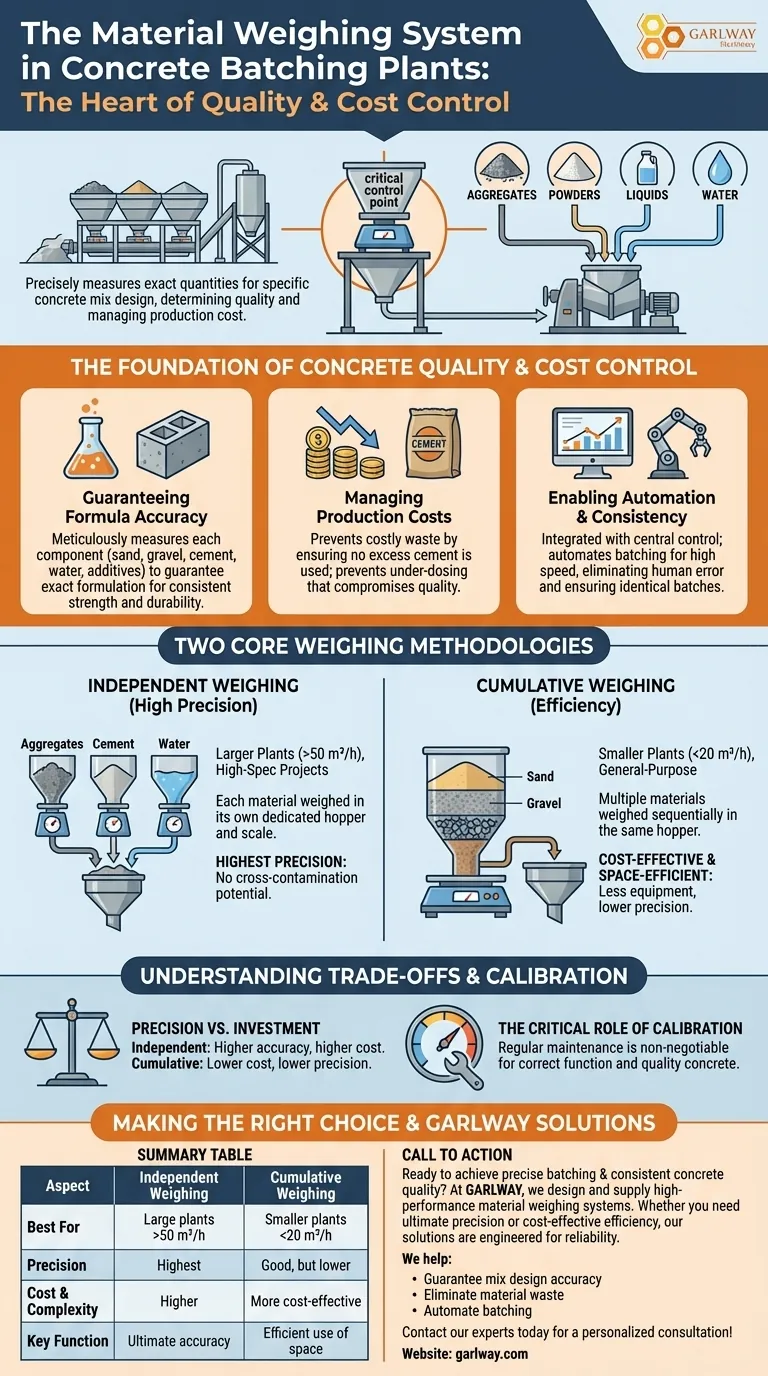
Visual Guide
Related Products
- HZS120 Ready Mix Concrete Batching Plant Commercial Mud Cement Mixer
- HZS35 Small Cement Concrete Mixing Batch Plant
- HZS75 Concrete Batching Plant Cement Mixer Price Concrete Mixer Bunnings Mixing Plant
- HZS180 Ready Mix Concrete Plant for Foundations with Sand and Cement
- Commercial Electric Concrete Mixer Machine HZS 50 Small Batch Plant for Sale
People Also Ask
- What is a ready mix concrete batching plant? The Engine of Modern Construction
- What is the name of the machine used in ready mix? Unpacking the Complete Concrete System
- What is the core component of a concrete batching plant? The Mixer Unit Defines Your Concrete Quality
- What are the types of concrete mixers used in batching plants? Choose the Right Mixer for Your Project
- What are the advantages and disadvantages of concrete batching plants? Maximize Quality & Efficiency





