
To protect an anchor pulpit from chain damage, the most common and effective solutions involve installing a protective chafe guard made from either marine-grade stainless steel or a high-density polymer like King Starboard. Both materials create a durable, sacrificial surface that absorbs the impact and abrasion from the anchor chain, preserving the wood or fiberglass beneath.
The core decision is a trade-off between two excellent materials. Stainless steel offers superior abrasion resistance and a classic aesthetic, while marine polymer provides excellent impact absorption and is far easier for the average boat owner to fabricate and install.
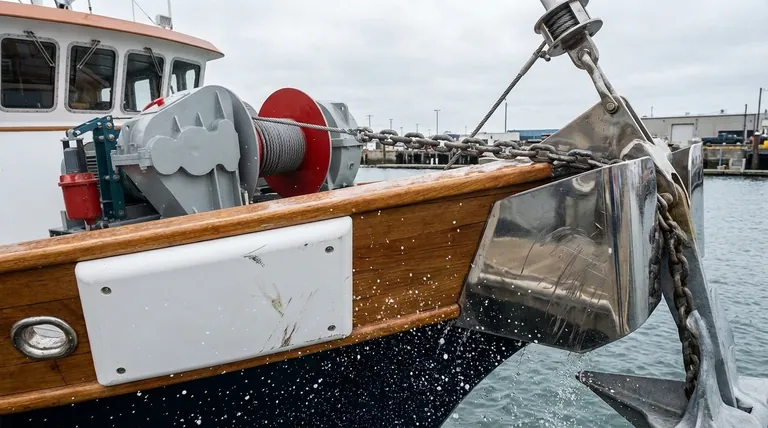
Understanding the Root Problem
Before choosing a solution, it's critical to understand the forces at play. Your anchor pulpit, especially if it's made of a beautiful wood like teak, is no match for a hardened steel anchor chain.
The Dynamics of Damage
The damage is twofold. First is abrasion, the constant grinding of the chain links against the pulpit surface as the boat swings at anchor. Second is impact, the heavy shock load when the anchor is retrieved and slams against the pulpit or roller.
The Goal: A Sacrificial Wear Surface
The goal of any protection is to introduce a material that is harder and more durable than the pulpit itself. This "chafe guard" is designed to take the abuse, acting as a replaceable wear surface that protects the permanent structure of the boat.
Option 1: The Stainless Steel Guard
A stainless steel chafe guard is the traditional choice for a classic, robust look that matches other deck hardware.
Unmatched Abrasion Resistance
For pure resistance to the grinding action of a chain, nothing beats metal. A properly installed stainless steel strip, typically from marine-grade 316L alloy, can last for decades.
A Classic Yacht Finish
A polished stainless guard looks professional and purposeful. It integrates seamlessly with other stainless hardware like cleats and stanchions, maintaining a high-end, traditional aesthetic.
Installation Nuances
Stainless steel is difficult to cut and shape without specialized tools. Installation requires precise drilling and countersinking for fasteners, and it's critical to properly bed the plate with marine sealant to prevent water intrusion underneath.
Option 2: The Marine Polymer Guard
Modern marine polymers, with King Starboard being the leading brand name, offer a practical and highly effective alternative to metal.
What is King Starboard?
King Starboard is a brand of High-Density Polyethylene (HDPE), a marine-grade plastic specifically formulated to be maintenance-free and withstand harsh sun and saltwater environments. It's incredibly tough and has a slightly slippery, low-friction surface.
Superior Impact Absorption
Unlike stainless steel, which can dent from a heavy impact, polymers like Starboard absorb shock. The material is forgiving and less likely to show dings from a misaligned anchor during retrieval.
DIY-Friendly Installation
This is the key advantage of polymer. It can be cut, routed, and drilled using standard woodworking tools, making it an ideal material for a do-it-yourself project. It's less expensive and much easier to custom-fit to complex curves.
Key Trade-offs: Steel vs. Polymer
Choosing between these two options comes down to prioritizing aesthetics, budget, and installation complexity.
Durability and Longevity
Stainless steel offers the best long-term resistance to abrasive wear. Marine polymer offers better resistance to impact damage (denting) and is completely impervious to corrosion.
Aesthetics
Steel provides a timeless, polished metal look. Polymer offers a clean, modern, and functional appearance, typically in white, off-white, or black, which can blend well with a boat's gelcoat.
Cost and Installation
Marine polymer is significantly less expensive and is the clear winner for DIY installation. A stainless steel guard will likely cost more for the material and may require professional fabrication and installation, adding to the expense.
Making the Right Choice for Your Pulpit
Your decision should be guided by your boat's style, your budget, and whether you plan to do the work yourself.
- If your primary focus is a classic aesthetic and maximum abrasion resistance: Choose a custom-fit, marine-grade (316L) stainless steel guard.
- If your primary focus is a cost-effective, impact-resistant, and DIY-friendly solution: Opt for a marine polymer guard like King Starboard.
Ultimately, either solution effectively transforms a vulnerable surface into a robust wear point, preserving the integrity and value of your pulpit for years to come.
Summary Table:
| Feature | Stainless Steel Guard | Marine Polymer Guard |
|---|---|---|
| Best For | Classic aesthetics, maximum abrasion resistance | DIY-friendly, impact resistance, cost-effectiveness |
| Durability | Superior abrasion resistance, decades-long lifespan | Excellent impact absorption, corrosion-free |
| Installation | Requires professional tools and skills | Easy to cut and install with standard tools |
| Cost | Higher material and installation cost | Lower cost, ideal for budget-conscious boaters |
| Aesthetics | Polished, traditional yacht finish | Clean, modern look in white, black, or off-white |
Ready to protect your anchor pulpit with the right solution?
At GARLWAY, we specialize in providing durable marine solutions for construction and marine professionals. Whether you need robust hardware or expert advice on marine-grade materials, we can help you choose the best protection for your vessel.
Contact us today to discuss your needs and discover how GARLWAY’s expertise in heavy-duty equipment can benefit your boating projects!
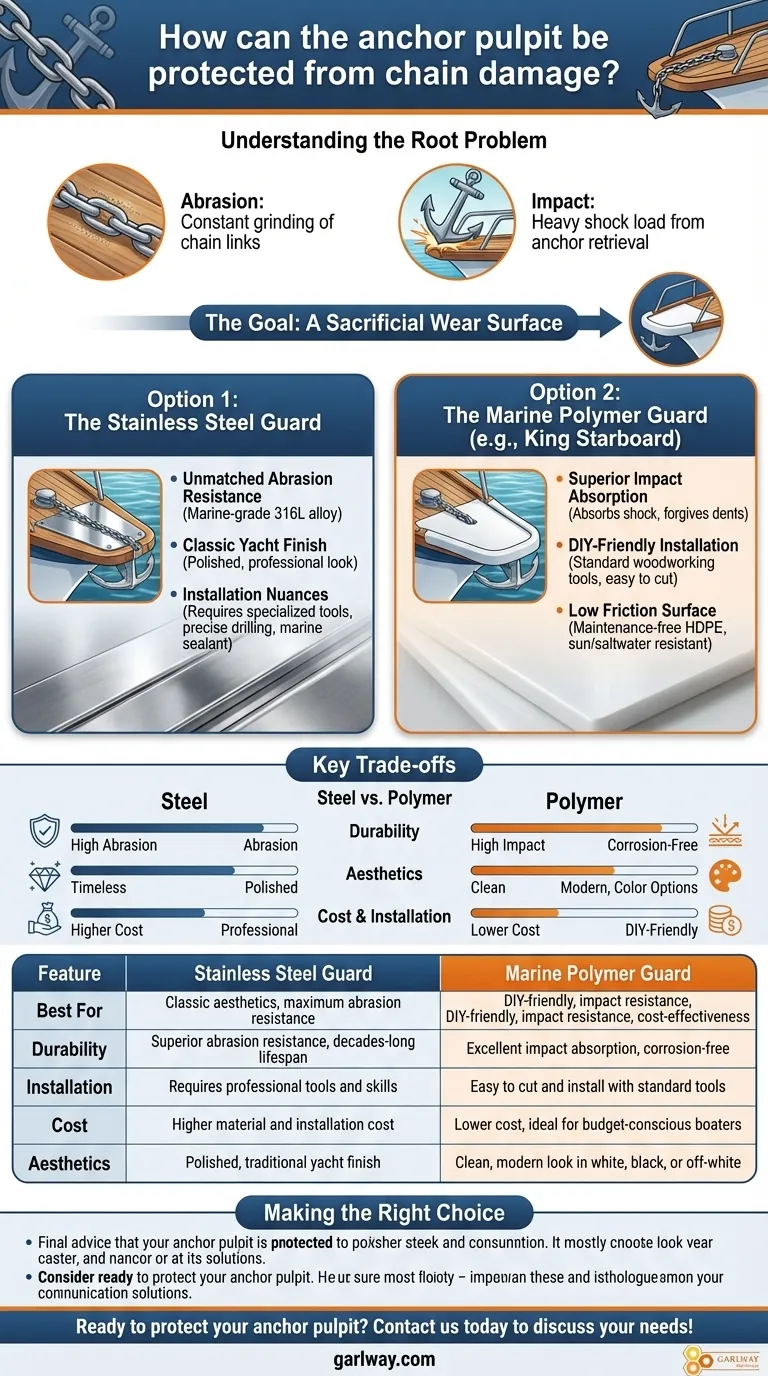
Visual Guide
Related Products
- Electric Hoist Winch Boat Anchor Windlass for Marine Applications
- Heavy Duty Electric Boat Winch Windlass Anchor
People Also Ask
- How does an electric anchor winch work? Power, Safety, and Reliable Operation Explained
- What are the advantages of installing an electric anchor winch on a boat? Boost Safety & Ease for Boaters
- What are the operational differences between electric hoists and winches? A Guide to Safe Lifting vs. Pulling
- What are the main benefits of a boat anchor winch? Boost Safety & Efficiency for Your Vessel
- How does a boat anchor winch work? A Guide to Reliable Anchor Handling

